

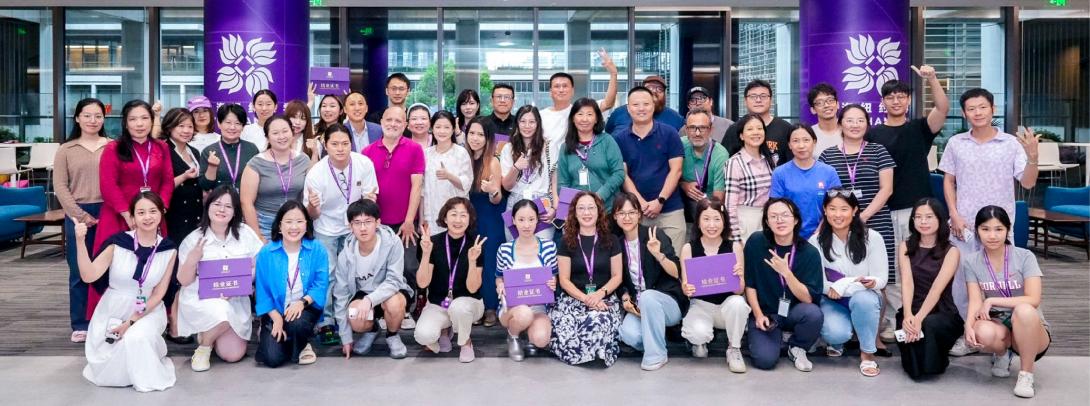
Food is never just a means of sustenance; it encapsulates culture, history, tradition, and innovation. A unique six-day summer non-degree course offering at NYU Shanghai, Understanding Our World Through Food, drew 55 participants, ages 18 to 61, from around the world, including China, the United States, Indonesia, and Mexico.
Some, like Wang Zi, a champion bread baker from China, were deeply involved in the food world; others came from backgrounds including design, engineering, finance and education.
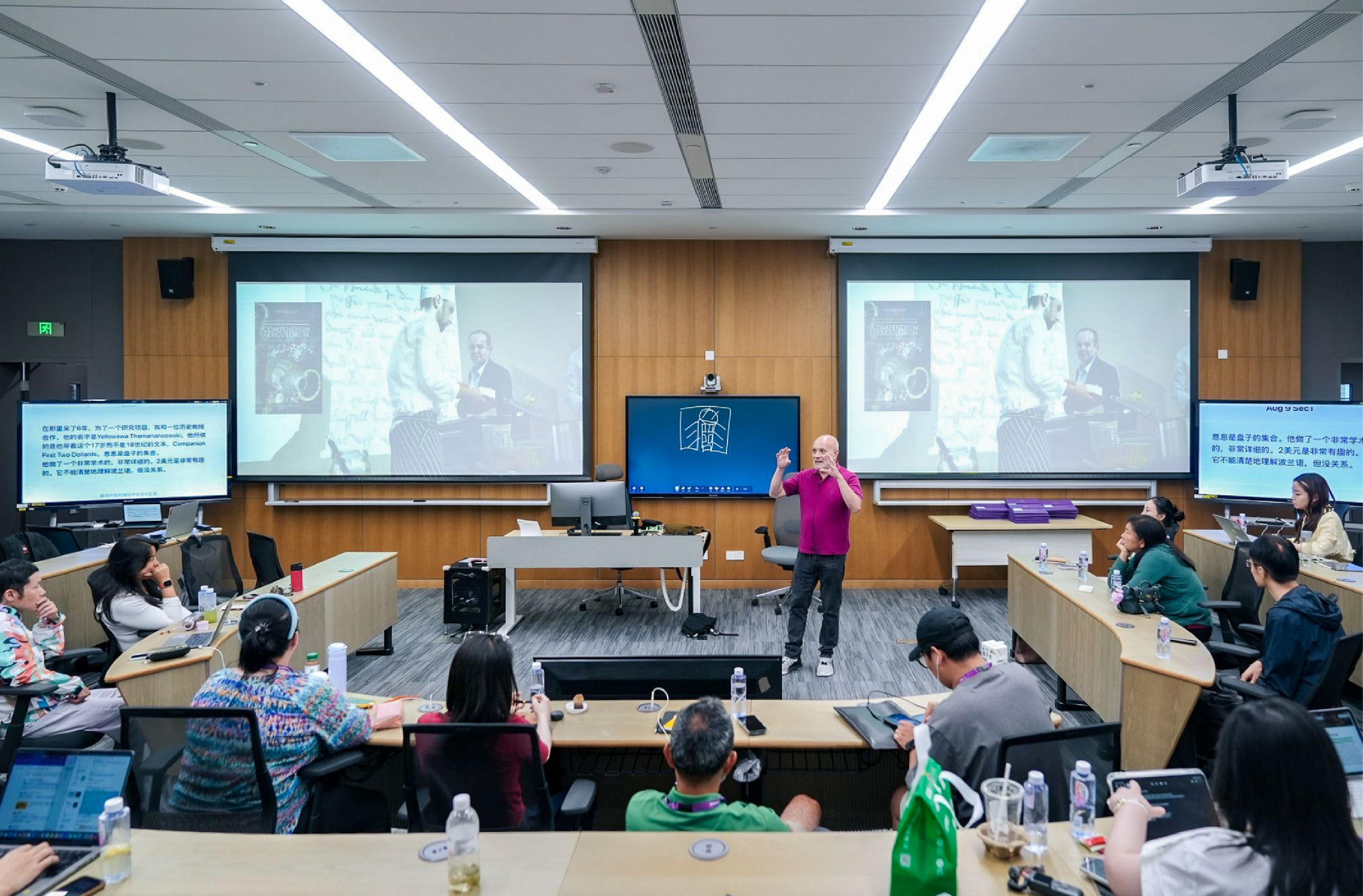
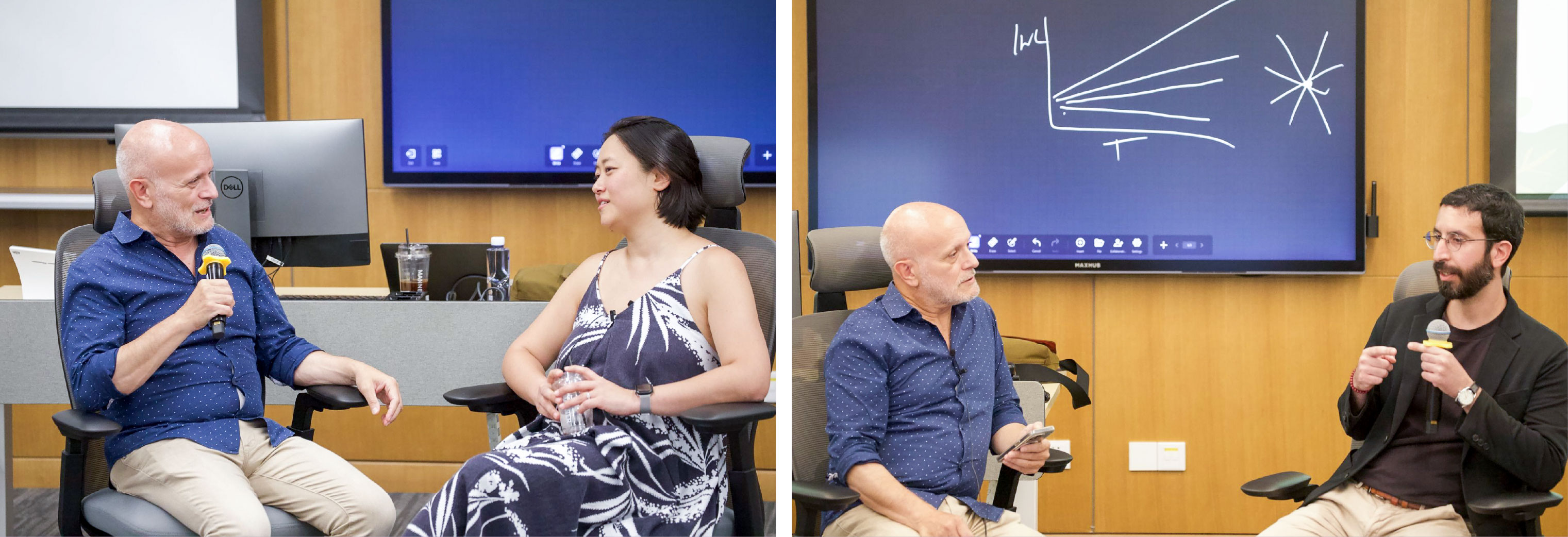
Part of NYU Shanghai Non-Degree Program’s Open Courses program providing short-term continuing education opportunities, the 30-hour class was designed and led by NYU Steinhardt Professor of Nutrition and Food Studies Fabio Parasecoli. In his lectures, Parasecoli drew upon a career of more than 30 years as a scholar exploring the cultural politics of food, particularly in media, design, heritage, and international affairs.
Professor Parasecoli led discussions on how food can be understood- from the personal and emotional, but also social, political, and economic. The conversation soon moved beyond the plate, following food across borders and looking at how migration, trade and globalization change what people eat – and how dishes are adapted, marketed and reinterpreted along the way.
To complement his lectures, Professor Parasecoli invited guest speakers from a range of food-related backgrounds to share their perspectives with the students.
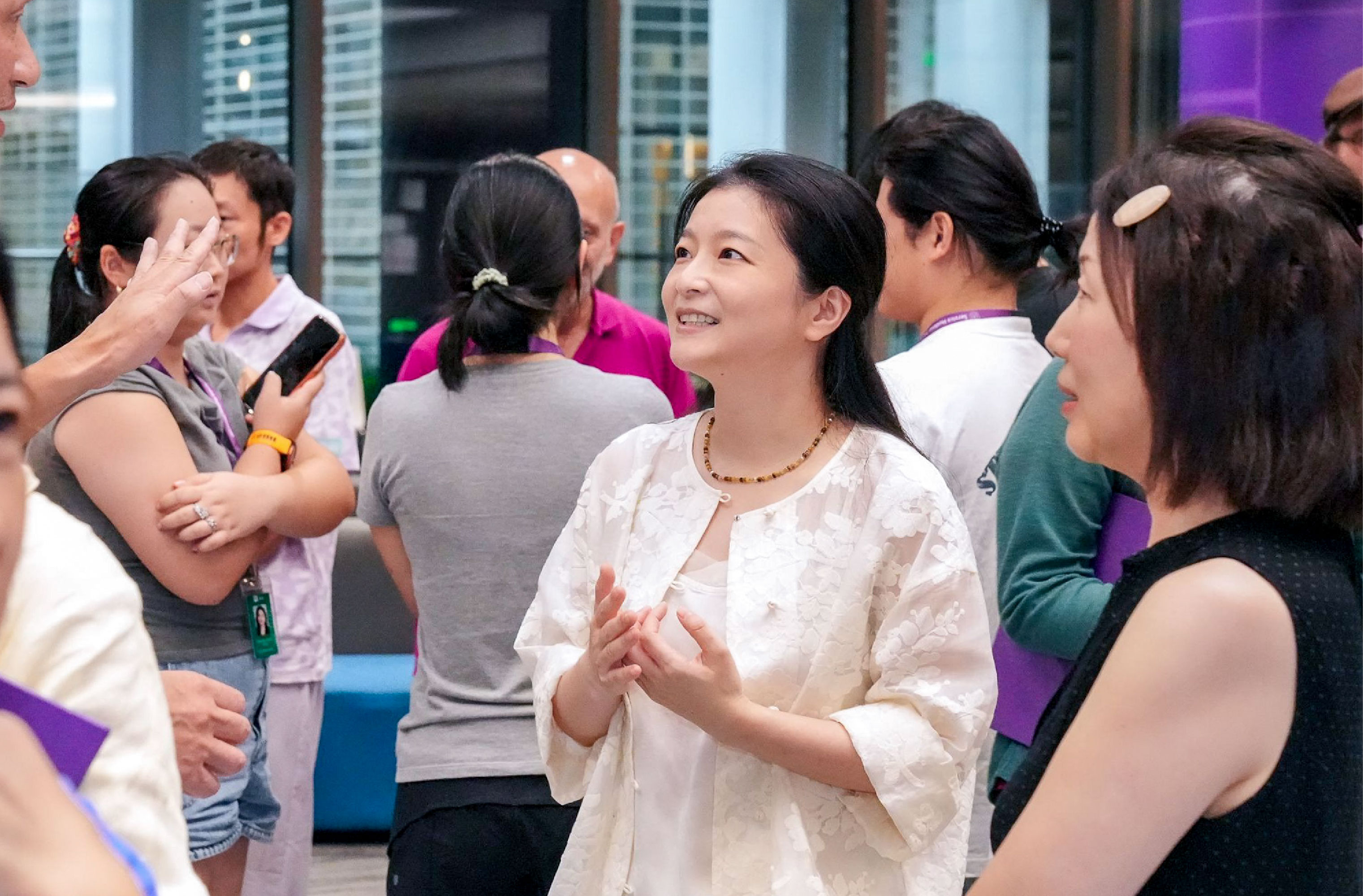
One of them was Chinese documentarian Deng Jie, whose work on internationally acclaimed food documentaries A Bite of China and Once Upon a Bite approach food through the lens of history.
She shared stories behind foods that have become staples in China today. Macanese dishes such as African chicken and Portuguese chicken grew out of maritime routes linking Lisbon, Goa, Malacca and Macau. Chili peppers reached China from the Americas less than five centuries ago. Today, it is difficult to imagine Sichuan, Hunan or Guizhou cooking without them.
“When we look closely at the dining table, what we see is not only food, but a global human history connected through food, without national borders,” she said.
For Deng, these movements of food and ingredients are part of tradition rather than a threat to it.
“Protecting cultural diversity does not mean holding tradition so tightly that it becomes an item in a museum,” she said. “We should move, taste and understand the migrations and stories behind food.”
Wang Zi, the champion bread baker, said the lecture led him to think about how China can eventually develop its own standards, techniques and flavor vocabulary. “I hope we Chinese bakers can develop a voice of our own,” he said. “Instead of only learning from Japan or France, we should have something that is truly ours.”
Another guest lecturer brought the kitchen into the classroom. Christiaan Stoop, executive chef of Michelin three-star restaurant Taian Table, has worked in kitchens across Europe and India and his menu features flavor references from around the world. But Stoop said, he has little patience for mixing cuisines simply for novelty: done badly, he warned, “fusion” becomes “confusion.”
To illustrate his point, Stoop’s team prepared a pre-dessert from Taian Table’s current tasting menu, a small pleasure built around strawberry and purple shiso, with celery, pickled mustard seeds, and shiso oil. Some of the ingredients were barely distinguishable, as Stoop explained that they were added to give the dish structure and depth.
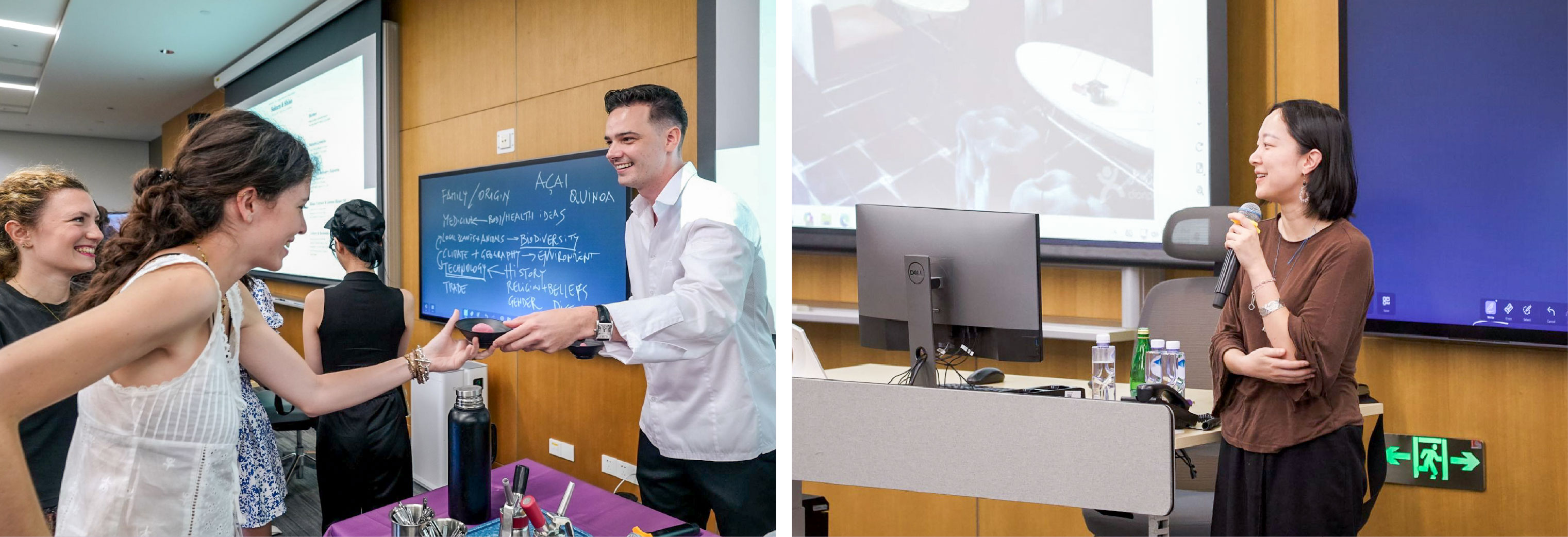
Guest lecturer Diao Wei approached food from a design standpoint, based on her experiences as founder of OHA Family and OHA Design. Trained in art and architecture, her design vision includes space, tableware, service and food as parts of the same experience.
Her design projects are often informed by her own food memories from her home in southwestern Guizhou Province, where she grew up watching her grandmother make sour soup and fermented foods. When she and her team were developing a restaurant featuring Indonesian-inspired dishes, they traveled to Indonesia to meet cooks and families before returning to Shanghai to test and revise the menu.
“I value tradition and I value authenticity, but… we should also be honest about ourselves,” she said.
Rachel Gouk, a reviewer whose food platform Nomfluence introduces the newest food trends sweeping Shanghai, focused her lecture on how social media shapes how people eat, as attractive food shots shared online drive sales. Having seen small restaurants become sensations almost overnight, she warned that concepts built mainly around virality can be hard to sustain.
As advertisements, algorithms and AI-generated content fill more online feeds, she said she expects audiences to seek out more distinctive voices and deeper stories.
“People want human connection -- not just with the narrator, but with the people behind the scenes,” she said.
Shanghai-based importer Alessandro Ingravalle spoke on how the Chinese market for international food goods has developed over the years, based on his experiences introducing Italian olive oil and nuts to the Chinese market.
Ingredients, processing, and supply chain transparency matter more than they once did, he said, noting that Chinese consumers are becoming more discerning when shopping for products labeled “imported.”
He and the class discussed the challenges presented by introducing Chinese ingredients to other markets, noting that quality Chinese products may not automatically succeed in Europe where regulations, eating habits and familiarity also matter.
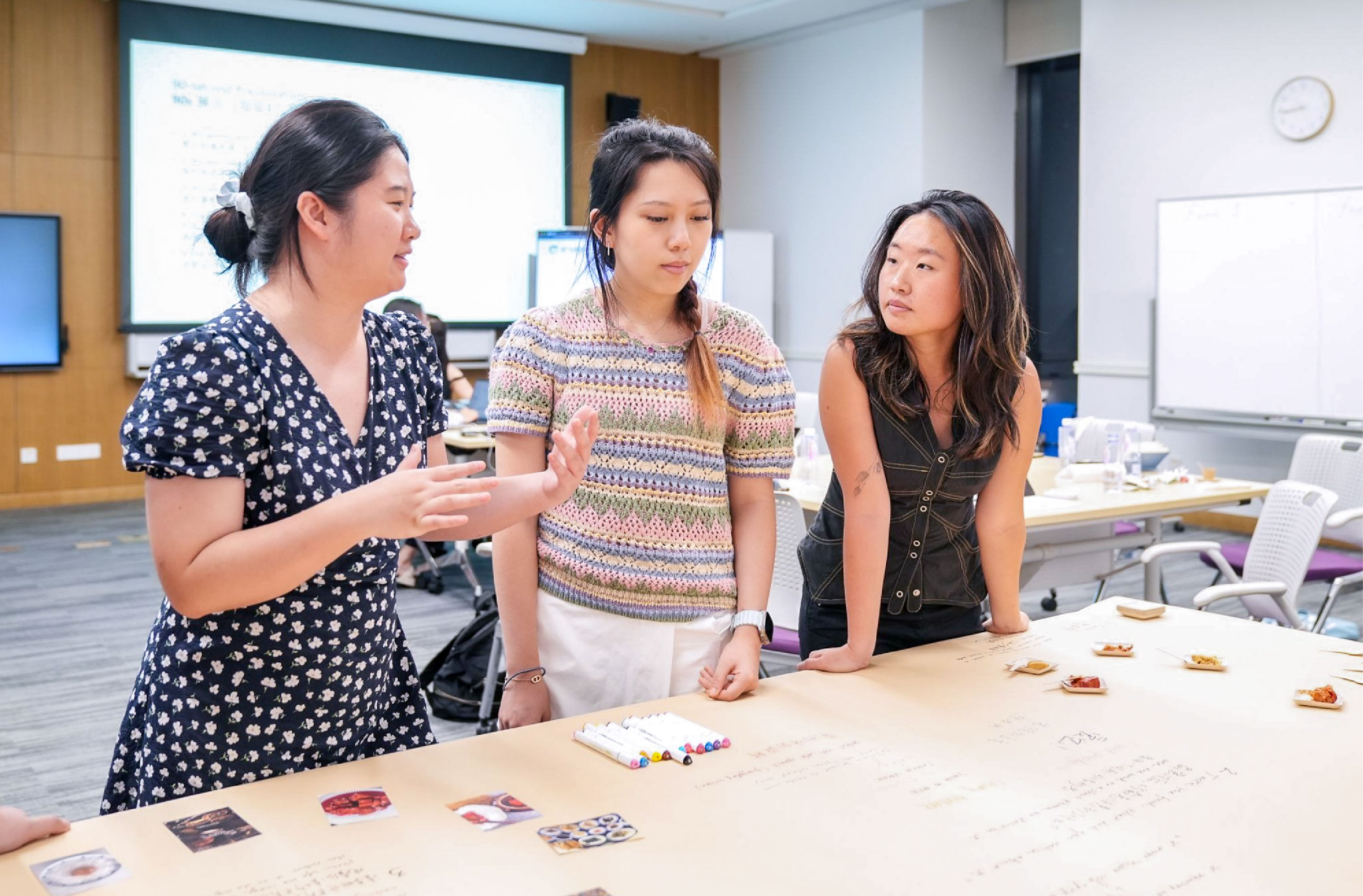
Shenzhen-based food experience designer Han Zhuotong led the class through a workshop on introducing unfamiliar fermented foods to the local market. One group designed a tasting sequence for jiuniang (fermented rice), inviting participants to experience bitter, salty, sour and sweet flavors before tasting the fermented rice. Another incorporated fermented bean curd into familiar Shanghai dishes such as steamed buns, bread and braised pork.
“Food design does not necessarily mean changing the food itself,” Han told them. “What we are really designing is the moment when people meet the food.”
Job Garcia, an engineer from Mexico, said the course made him consider all the forces at work that bring a meal to his plate.
“When we choose what to eat, there are health impacts, environmental impacts and the supply chain -- everything is connected,” he said.
Garcia said the wide mix of students brought an added dimension to the classes, as each brought with them their own experiences with food. He said he valued the mix of people and backgrounds who came together in the classroom.
“It doesn’t matter where we come from,” he said. “We have common ground, and that is food.”
As the course came to an end, Professor Parasecoli encouraged the students to continue to explore their interest in food.
“Food is really a way to get to know the world,” he said. “I hope you will continue thinking about food, talking about food, enjoying food above all.”