

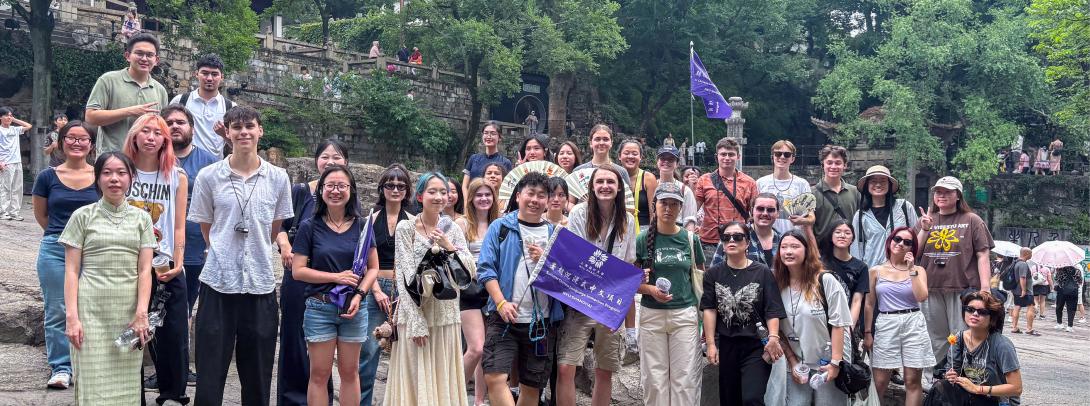
Nearly 60 students from 22 universities and 14 countries spent their summer studying, living, and interacting in Mandarin as part of NYU Shanghai’s annual Summer Chinese Immersion Program. Now in its eighth year, the program has grown in popularity, with a 50 percent increase in enrollment from last year alone.
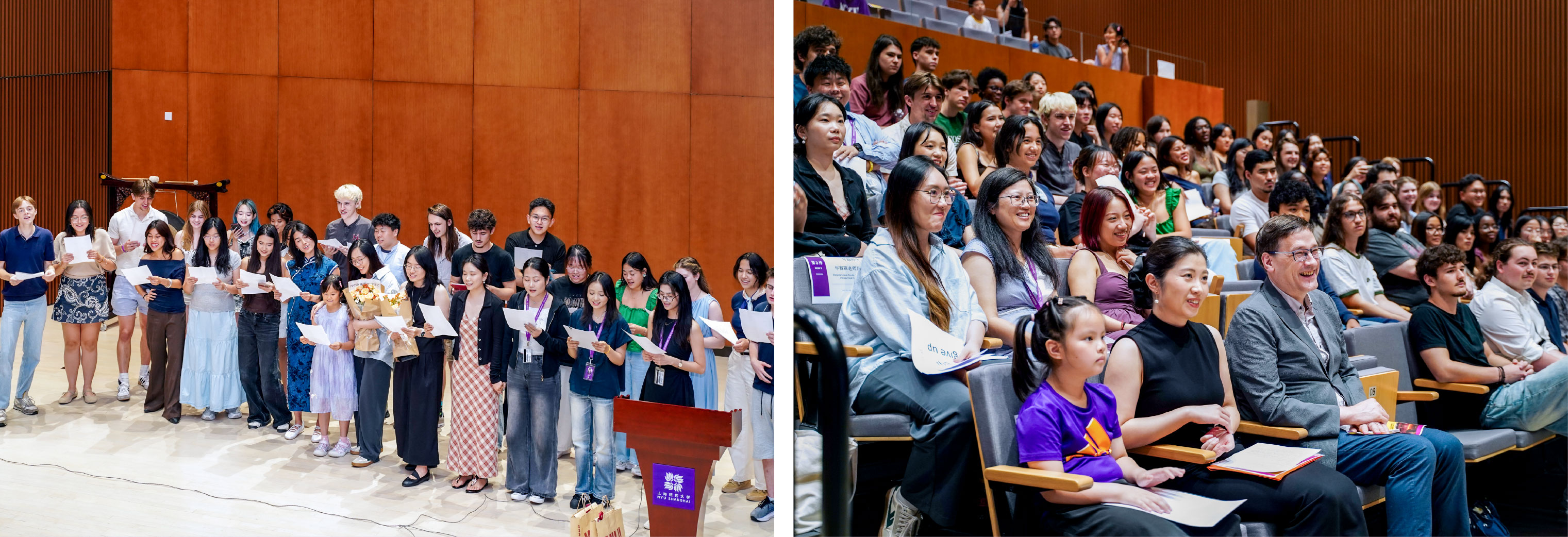
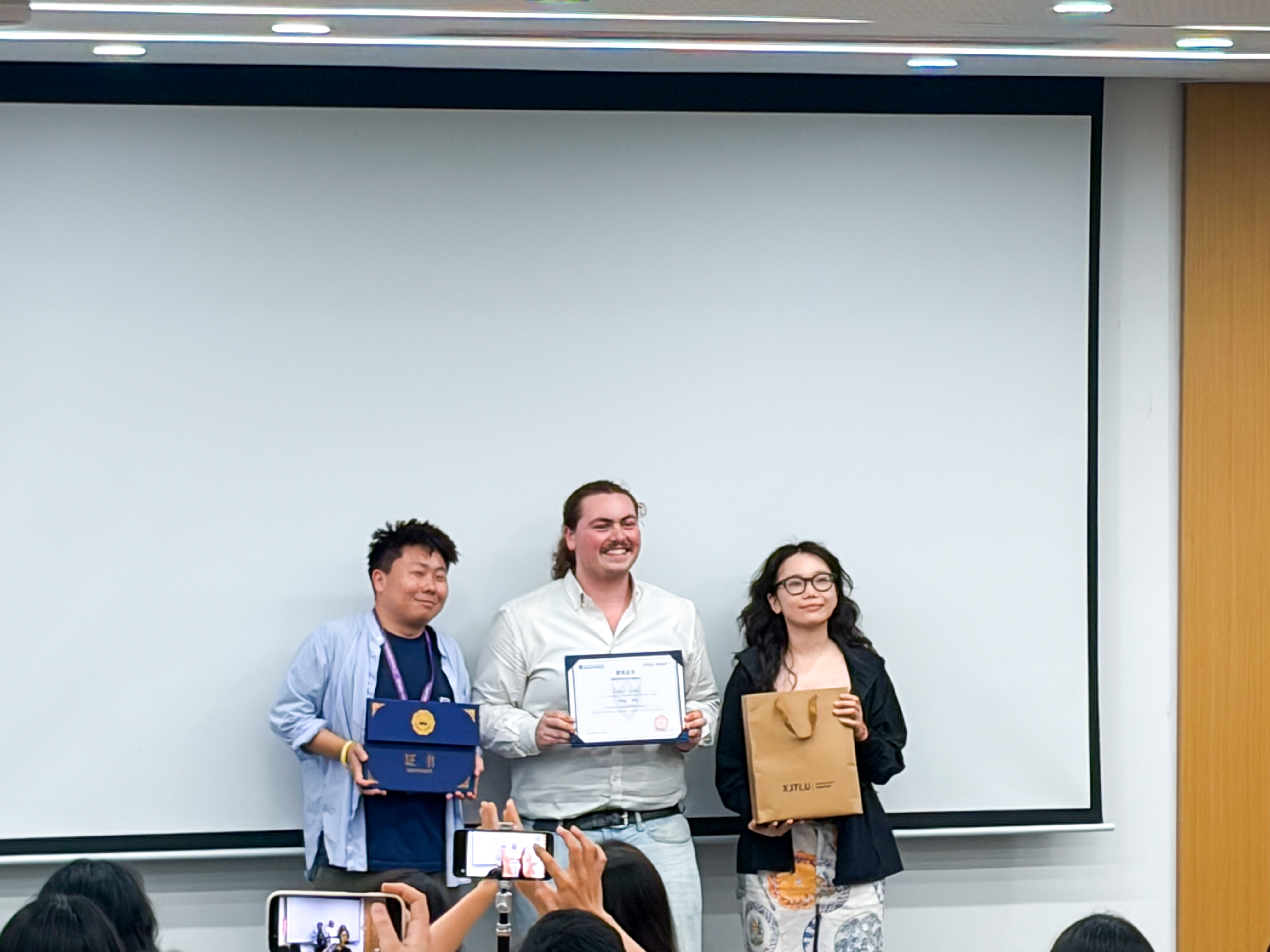
Right: The closing ceremony in progress
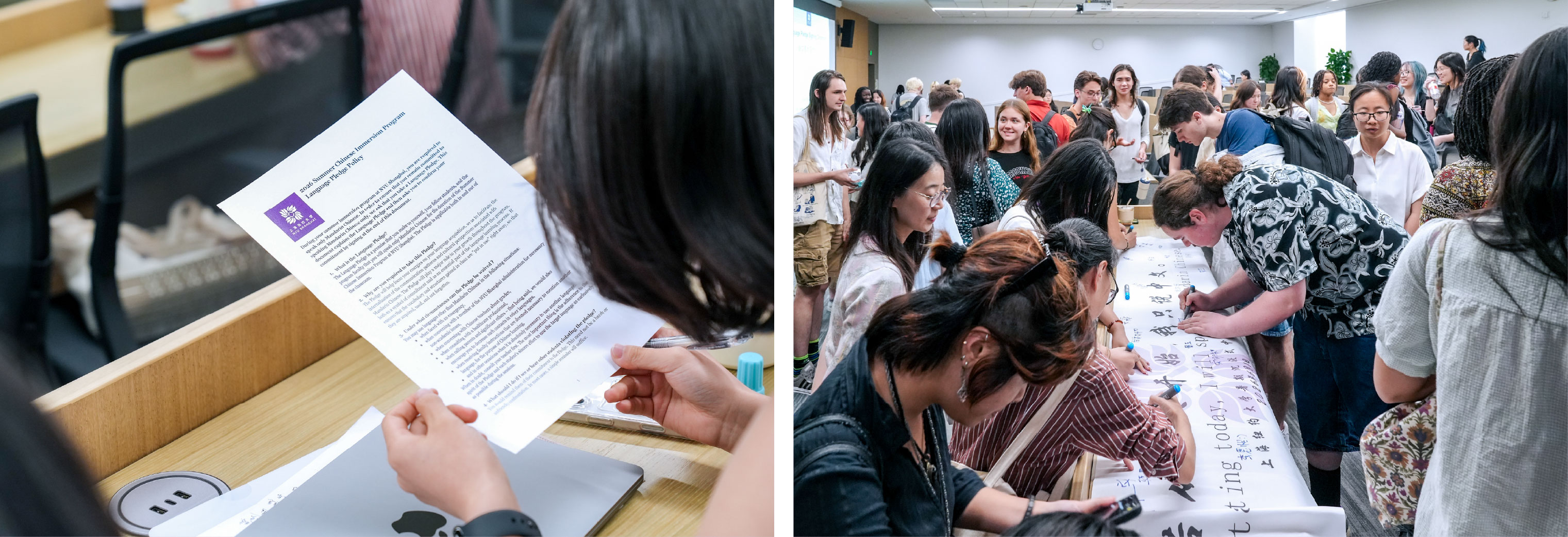
The program’s language pledge remains central to the nine-week immersive experience, which packs the equivalent of two semesters of coursework, including classes, tutorials, cultural activities, field trips, and a Chinese speech competition. This year’s program featured 4 levels of language classes, giving students from diverse backgrounds an opportunity to start or advance their studies. For the first time, students also organized their own clubs based on their interests, including boxing and film.
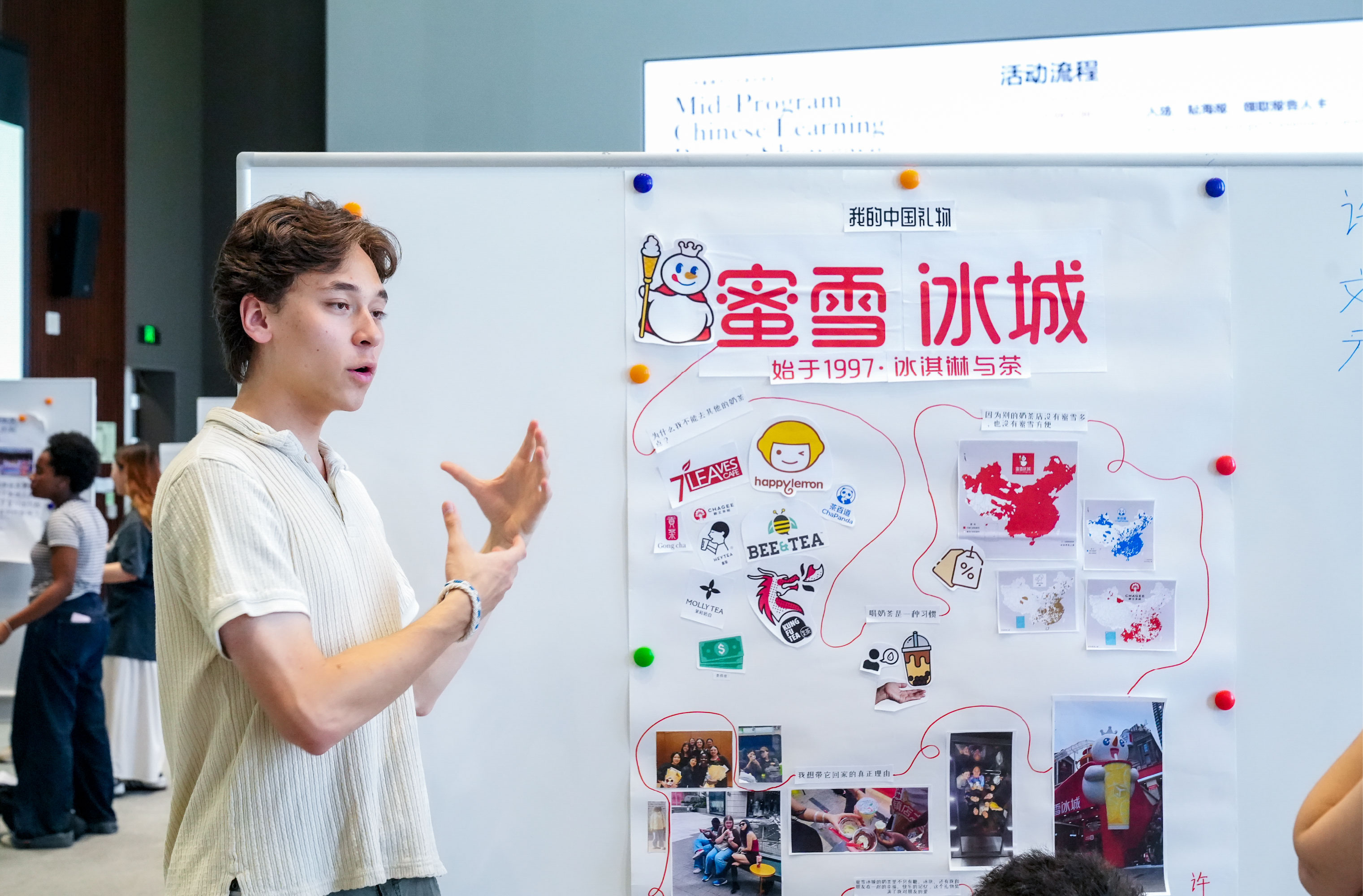
“It was exhausting and busy, but also incredibly happy,” said NYU Shanghai student Jacob Jui ’29 from the United States, practicing his Mandarin. “Since coming here, I’ve become more outgoing and pushed myself to speak Chinese and connect with people more.”
The program has continued to evolve by drawing on international best practices and expanding exchanges with peer institutions. This year, instructors or delegations from NYU New York, Cornell University, George Washington University, Hamilton College, Princeton, and Yale University visited the program. A week before the program began, Chih-p’ing Chou, professor emeritus of East Asian Studies at Princeton University, returned to NYU Shanghai for a second year to lead training for instructors and teaching assistants. With more than four decades of experience in Chinese language education, including founding the Princeton in Beijing program, Chou praised the program’s development and NYU Shanghai’s sustained commitment to the field.
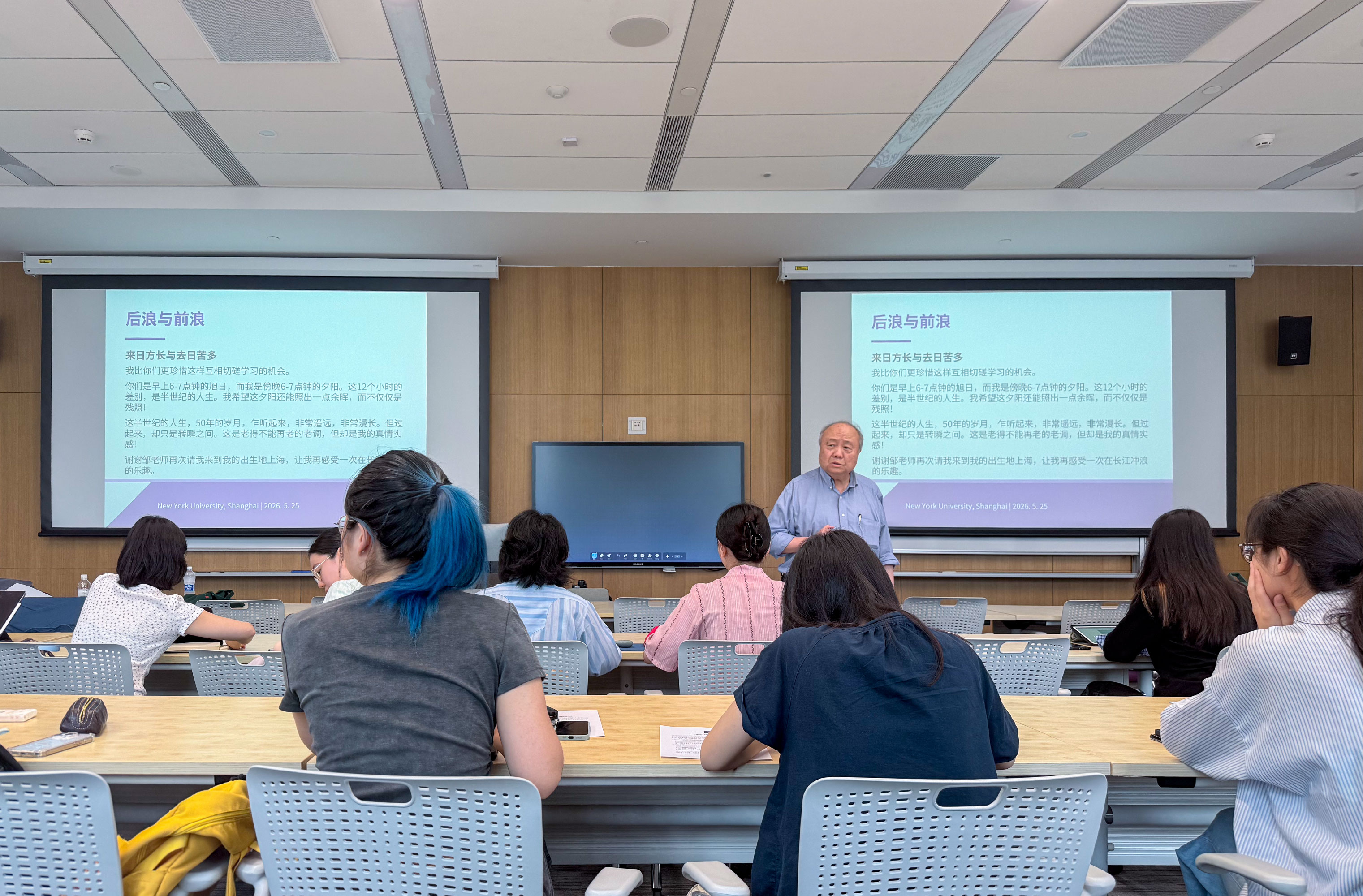
“Learning a foreign language is like opening a new window—it can change the course of a person’s life,” Chou said. Programs like the Summer Chinese Immersion Program, he added, open doors to literature, history, and culture while fostering a deeper understanding of and respect for a country and its people.
Last year, the program introduced Life in Shanghai, a textbook centered on Shanghai and the Yangtze River Delta region. Expanded this year with new lessons tied to local culture and history, the textbook aims to connect language learning with place-based experiences, including a field trip to the historic region of Huizhou in Anhui Province. “We hope students can use Chinese to build a genuine connection with this place, including the people who live here,” said Lian Jiani, senior language lecturer in Chinese at NYU Shanghai and coordinator of this year’s program.
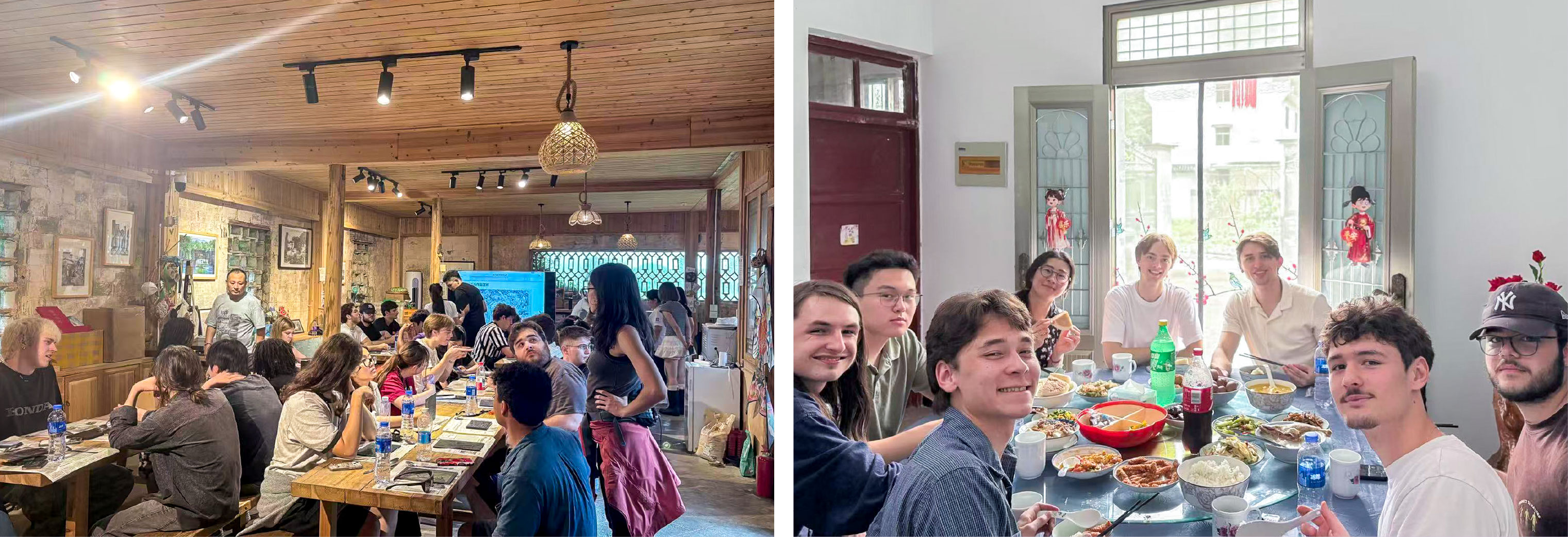
For the most advanced students, Chinese classics play an important role in the curriculum. “Language will always change, but we need to understand what remains constant beneath that change,” said Zou Xin, program director and associate professor of Global China Studies.
The wide range of topics, including contemporary Chinese film and fiction, prioritized participation, allowing students to bring their own ideas to the forefront. “The students have very strong ideas of their own,” said Zhang Qing, one of the thirteen teaching assistants in the program. “Open-ended topics give them plenty of room to exchange perspectives.”
Yale University student Amy Dong said the level of instruction and supportive learning setting helped her improve her language skills. “Through the small-group classes and one-on-one tutoring, I’ve also gotten really close to the teachers,” she said. “They’re not just teachers, but also people I can always turn to with questions, which makes it really easy to talk to them.”
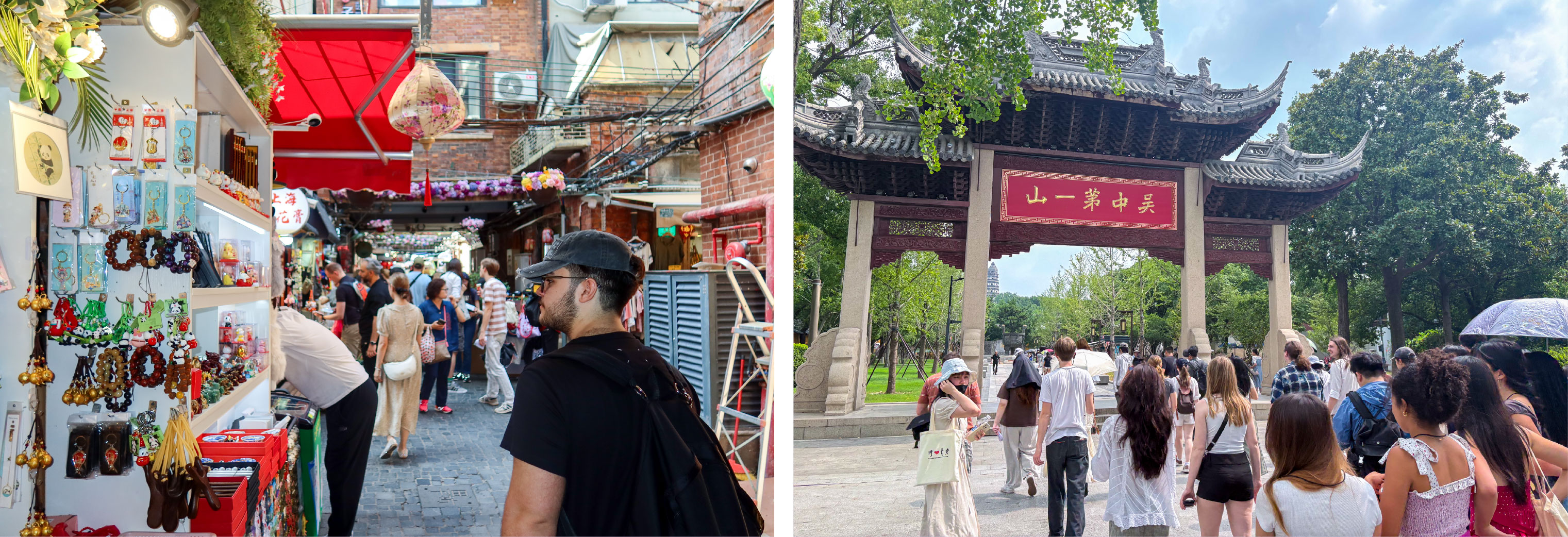
Right: Students visited Tiger Hill Scenic Area in Suzhou.
For many students, the program’s rigor and intensity have also brought rapid gains in Chinese proficiency, lasting friendships, and greater confidence. University of Virginia Commonwealth student Faith Parker said the program was worth the challenge of speaking only Mandarin for more than two months. “Nine weeks wasn’t easy, but it was definitely worth it, and I hope to keep learning,” she said.
___________________________
Intercollegiate Chinese Speech Contest Results Announced
An integral part of NYU Shanghai’s Summer Chinese Immersion Program, the Language Connects the World: 2026 Eastern China Summer Inter-University Chinese Speech Contest was held on July 17 at Xi’an Jiaotong-Liverpool University. Co-organized by NYU Shanghai, CET Shanghai, Duke Kunshan University, and Southern Methodist University, the contest brought together 61 international students and nearly 100 audience members. Congratulations to the 12 program students across all four levels who won awards in the contest.