

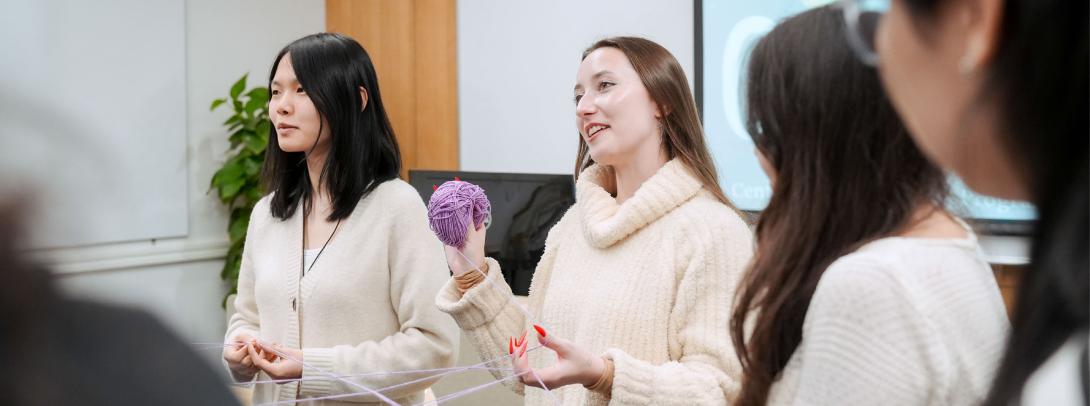
For first-year students, the pressures of school work, maintaining friendships, navigating a new cultural environment, while learning to manage their lives for the first time can be a balancing act. At NYU Shanghai, a program designed to help students work through these challenges– the First Year Dialogues (FYD)— offers a space for students to connect, share their experiences, and learn from one another.
At its core, the First Year Dialogues program is designed to offer first-year students a chance to step back from their studies and engage in discussions about their life experiences. Shelly Lu, director for Center for New Student Programs said: “The FYD program provides students a platform to express and reflect their experience in cultural adaptation, relationships, budgeting, and life balance together with their peers, which lays a foundation for their college success.”
Upperclass student facilitators who have already navigated the challenges of the first year lead weekly sessions with groups of approximately 8 students. First year students can engage with peers who understand what they’re going through while also benefiting from the advice of those who have already been in their shoes.
Staff facilitators bring along their unique perspective to each session too. Ding Jieyi, coordinator for Graduate Student Life said she wanted to join as a mentor-like figure to provide support to students in one of their most life-changing years. “I know this is a really important period of time for them. So if I could be part of it and contribute to their adjustment to the new environment, new period of life, I think it is meaningful and also a part of the learning process for myself as well.”
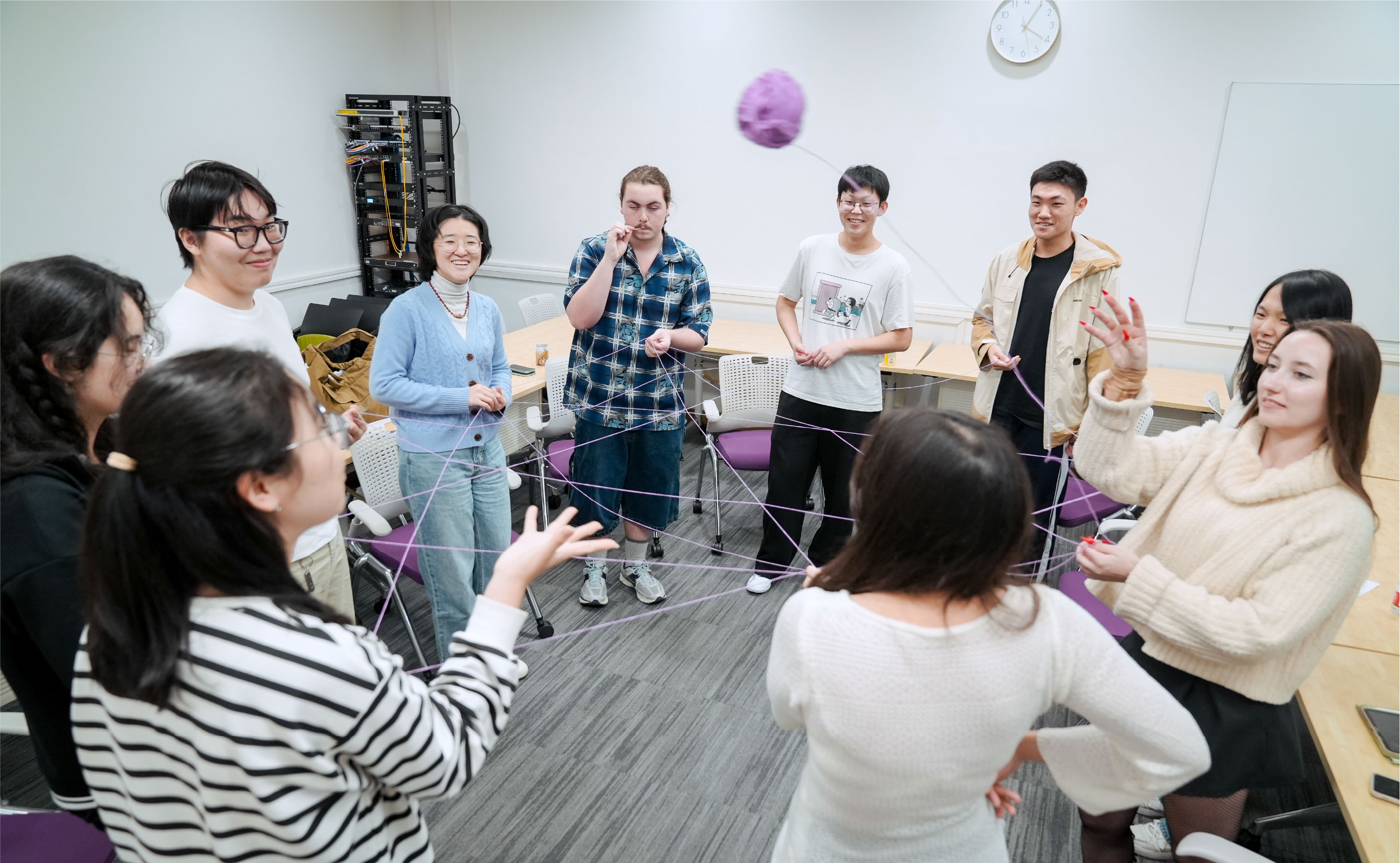
For many students, First Year Dialogues can be a transformative experience that helps them grow both personally and socially. For Scarlett Zhang ’29, the program has provided an opportunity to practice being vulnerable in a supportive, non-judgmental space. “In one of our activities, we were asked to toss a ball of yarn to someone and share why they inspired us or what we had learned from them,” she recalls. “As a Chinese person, I’m not always comfortable expressing my feelings directly, especially if I really like someone. But after that activity, I felt so much better when I could say, ‘I really appreciate you.’”
Hakob Khachikyan ’28 agrees that the dialogues are a great way to become more comfortable voicing feelings. He joined as a facilitator this year after enjoying the dialogues as a first year student last year. “It helps you talk about certain topics that you might have not had the opportunity to do before, he said, “and now I feel like I can describe things more easily.”
He said his motivation for becoming a facilitator this year was to share first-hand experiences and gain greater social awareness, “I feel like after living here for a year, I’ve gained some experience and knowledge on certain things first year students might benefit from. And I believe that there's still a lot to learn from everyone studying here on this campus.”
Oftentimes learning from others can mean hearing what they like or dislike about campus life or even an activity itself. For example, one of the dialogues involved an activity where participants were asked to give feedback on something they didn’t enjoy. For Zhang, this activity helped her to learn to practice honesty with kindness. “I didn’t want to tell the group that I didn’t like an activity,” she admits. “But once I did, it felt so relieving. It was a moment of personal growth.”

For other students like Luciano Lococo ‘29, FYD has provided a crucial support network. Coming from a low-income background, Lococo initially struggled with feelings of isolation and uncertainty when he arrived at NYU Shanghai. “I wasn’t sure if anyone would relate to my experiences. I thought about transferring,” he said. “But having FYD as this back up group that I always go to every Tuesday was just amazing to speak to other people that were kind of like-minded where we would talk about our struggles for that week, but also some highs.”
Lococo said that the weekly sessions allowed him to build confidence and gain insight into how other students were dealing with similar challenges. “There hasn’t been a single time I regretted going to FYD. I wish we met more often and that the program was longer,” he said.
The First Year Dialogues program is more than just a support network It also provides valuable opportunities for personal and professional growth. Ding Jieyi says that she has been impressed by how students are learning to be open with each other. “I especially feel touched when I heard some students tell an upperclass peer facilitator ‘you inspired me to think about taking student leader roles in the future, because you are doing so many,” she said.In this way, FYD fosters an environment of peer learning, where both students and facilitators gain from each other’s perspectives. For first-year students, the program provides a much-needed outlet for self-expression and connection in a time of transition. For facilitators, it’s a chance to give back and develop their leadership skills.
Whether it’s building lasting friendships, improving communication skills, or learning to manage stress and time management, FYD is more than just a program, it’s a resource for first-year students willing to challenge their own perspectives and be reminded they’re not alone.